> ## Documentation Index
> Fetch the complete documentation index at: https://docs.elementary-data.com/llms.txt
> Use this file to discover all available pages before exploring further.
# Running Elementary Tests and Generate Reports
## Elementary CLI Setup
The CLI tool allows users to generate reports and visuallize results based on the tests we just configured. While we have already added the Elementary packages to our dbt project, the Elementary CLI requires a separate installation, as it is a Python tool.
Important: Both dbt Cloud and dbt Core users will need to run the Elementary
CLI locally. If you are a cloud user, you will need to ensure your
configuration has met all the [prerequisites](/tutorial/setup).
Run one of the following commands based on your platform:
## Install Elementary CLI
To install the monitor module run:
```shell theme={null}
pip install elementary-data
```
Run one of the following commands based on your platform (no need to run all):
```shell theme={null}
pip install 'elementary-data[snowflake]'
pip install 'elementary-data[bigquery]'
pip install 'elementary-data[redshift]'
pip install 'elementary-data[databricks]'
pip install 'elementary-data[athena]'
pip install 'elementary-data[trino]'
pip install 'elementary-data[clickhouse]'
pip install 'elementary-data[duckdb]'
pip install 'elementary-data[dremio]'
pip install 'elementary-data[spark]'
pip install 'elementary-data[vertica]'
## Postgres doesn't require this step
```
Run `edr --help` in order to ensure the installation was successful.
If you're receiving `command not found: edr` please check our [troubleshooting guide](/oss/general/troubleshooting).
## Configuring the Elementary Profile
In order to connect, Elementary needs a [connection profile](https://docs.getdbt.com/dbt-cli/configure-your-profile) in a file named `profiles.yml`.
This profile will be used by the CLI, to connect to the DWH and find the dbt package tables.
The easiest way to generate the profile is to run the following command within the dbt project where you deployed the elementary dbt package (works in dbt cloud as well):
```shell theme={null}
dbt run-operation elementary.generate_elementary_cli_profile
```
Ensure that you fill in your password and any other missing fields after you
paste the profile in your **local** `profiles.yml` file.
Copy the output, fill in the missing fields and add the profile to your `profiles.yml`.
Here is a demonstration:
### Elementary profile details and format
* Path: `HOME_DIR/.dbt/profiles.yml`
* Profile name: `elementary`
* Schema name: The schema of elementary models, default is `_elementary`
```yml Snowflake theme={null}
## SNOWFLAKE ##
## By default, edr expects the profile name 'elementary'. ##
## Configure the database and schema of elementary models. ##
## Check where 'elementary_test_results' is to find it. ##
elementary:
outputs:
default:
type: snowflake
account: [account id]
user: [username]
role: [user role]
## Keypair auth (recommended) ##
private_key_path: [path/to/private.key]
# or private_key instead of private_key_path
private_key_passphrase: [passphrase for the private key, if key is encrypted]
database: [database name]
warehouse: [warehouse name]
schema: [schema name]_elementary
threads: 4
```
```yml BigQuery theme={null}
## BIGQUERY ##
## By default, edr expects the profile name 'elementary'. ##
## Configure the database and schema of elementary models. ##
## Check where 'elementary_test_results' is to find it. ##
elementary:
outputs:
default:
type: bigquery
## Service account auth ##
method: service-account
keyfile: [full path to your keyfile]
project: [project id]
dataset: [dataset name] # elementary dataset, usually [dataset name]_elementary
threads: 4
location: [dataset location]
priority: interactive
```
```yml Redshift theme={null}
## REDSHIFT ##
## By default, edr expects the profile name 'elementary'. ##
## Configure the database and schema of elementary models. ##
## Check where 'elementary_test_results' is to find it. ##
elementary:
outputs:
default:
type: redshift
host: [hostname, like hostname.region.redshift.amazonaws.com]
## User/password auth ##
user: [username]
password: [password]
dbname: [database name]
schema: [schema name] # elementary schema, usually [schema name]_elementary
threads: 4
keepalives_idle: 240 # default 240 seconds
connect_timeout: 10 # default 10 seconds
# search_path: public # optional, not recommended
sslmode:
[
optional,
set the sslmode used to connect to the database (in case this parameter is set,
will look for ca in ~/.postgresql/root.crt),
]
ra3_node: true # enables cross-database sources
```
```yml Databricks theme={null}
## DATABRICKS ##
## By default, edr expects the profile name 'elementary'. ##
## Configure the database and schema of elementary models. ##
## Check where 'elementary_test_results' is to find it. ##
elementary:
outputs:
default:
type: databricks
host: [hostname, like .cloud.databricks.com]
http_path: [like /sql/1.0/endpoints/]
schema: [schema name] # elementary schema, usually [schema name]_elementary
token: [token]
threads: [number of threads like 8]
```
```yml Postgres theme={null}
## POSTGRES ##
## By default, edr expects the profile name 'elementary'. ##
## Configure the database and schema of elementary models. ##
## Check where 'elementary_test_results' is to find it. ##
elementary:
outputs:
default:
type: postgres
host: [hostname]
user: [username]
password: [password]
port: [port]
dbname: [database name]
schema: [schema name] # elementary schema, usually [schema name]_elementary
threads: [1 or more]
keepalives_idle: 0 # default 0 seconds
connect_timeout: 10 # default 10 seconds
# search_path: public # optional, not recommended
# role: [optional, set the role dbt assumes when executing queries]
# sslmode: [optional, set the sslmode used to connect to the database]
```
```yml Athena theme={null}
## ATHENA ##
## By default, edr expects the profile name 'elementary'. ##
## Configure the database and schema of elementary models. ##
## Check where 'elementary_test_results' is to find it. ##
elementary:
outputs:
default:
type: athena
work_group: [athena workgroup]
s3_staging_dir: [s3_staging_dir] # Location to store query results & metadata
s3_data_dir: [s3 data dir] # Location to store table data (if not specified, s3_staging_dir is used)
region_name: [aws region name] # AWS region, e.g. eu-west-1
database: [database name]
schema: [schema name] # elementary schema, usually [schema name]_elementary
threads: [number of threads like 8]
```
```yml Clickhouse theme={null}
## Clickhouse ##
## By default, edr expects the profile name 'elementary'. ##
## Configure the database and schema of elementary models. ##
## Check where 'elementary_test_results' is to find it. ##
elementary:
outputs:
default:
type: clickhouse
schema: [schema name] # elementary schema, usually [schema name]_elementary
host: [hostname]
port: [port]
user: [username]
password: [password]
threads: [number of threads like 8]
```
```yml Trino theme={null}
## Trino ##
## By default, edr expects the profile name 'elementary'. ##
## Configure the database and schema of elementary models. ##
## Check where 'elementary_test_results' is to find it. ##
elementary:
outputs:
default:
type: trino
host: [hostname]
port: [port]
database: [database name]
schema: [schema name] # elementary schema, usually [schema name]_elementary
threads: [1 or more]
method: [authentication method] # ldap, oauth etc.
user: [username]
# password: [optional, used with ldap authentication ]
# session_properties: [optional, sets Trino session properties used in the connection]
```
```yml DuckDB theme={null}
## DUCKDB ##
## By default, edr expects the profile name 'elementary'. ##
## Configure the database and schema of elementary models. ##
## Check where 'elementary_test_results' is to find it. ##
elementary:
outputs:
default:
type: duckdb
path: [path to your .duckdb file]
schema: [schema name] # elementary schema, usually [schema name]_elementary
threads: [1 or more]
```
```yml Dremio theme={null}
## DREMIO ##
## By default, edr expects the profile name 'elementary'. ##
## Configure the database and schema of elementary models. ##
## Check where 'elementary_test_results' is to find it. ##
## -- Dremio Cloud -- ##
elementary:
outputs:
default:
type: dremio
cloud_host: api.dremio.cloud # or api.eu.dremio.cloud for EU
cloud_project_id: [project ID]
user: [email address]
pat: [personal access token]
use_ssl: true
object_storage_source: [name] # alias: datalake
object_storage_path: [path] # alias: root_path
dremio_space: [name] # alias: database
dremio_space_folder: [path] # alias: schema, usually [schema]_elementary
threads: [1 or more]
## -- Dremio Software -- ##
elementary:
outputs:
default:
type: dremio
software_host: [hostname or IP address]
port: 9047
user: [username]
password: [password] # or use pat: [personal access token]
use_ssl: [true or false]
object_storage_source: [name] # alias: datalake
object_storage_path: [path] # alias: root_path
dremio_space: [name] # alias: database
dremio_space_folder: [path] # alias: schema, usually [schema]_elementary
threads: [1 or more]
```
```yml Spark theme={null}
## SPARK ##
## By default, edr expects the profile name 'elementary'. ##
## Configure the database and schema of elementary models. ##
## Check where 'elementary_test_results' is to find it. ##
elementary:
outputs:
default:
type: spark
method: [thrift, http, or odbc]
host: [hostname]
port: [port]
user: [username]
schema: [schema name] # elementary schema, usually [schema name]_elementary
threads: [1 or more]
# token: [optional, used with http method]
```
```yml Fabric theme={null}
## FABRIC ##
## By default, edr expects the profile name 'elementary'. ##
## Configure the database and schema of elementary models. ##
## Check where 'elementary_test_results' is to find it. ##
elementary:
outputs:
default:
type: fabric
driver: ODBC Driver 18 for SQL Server
server: [hostname]
port: 1433
database: [database name]
schema: [schema name] # elementary schema, usually [schema name]_elementary
authentication: ActiveDirectoryServicePrincipal
tenant_id: [tenant_id]
client_id: [client_id]
client_secret: [client_secret]
threads: [1 or more]
```
```yml SQL Server theme={null}
## SQL SERVER ##
## By default, edr expects the profile name 'elementary'. ##
## Configure the database and schema of elementary models. ##
## Check where 'elementary_test_results' is to find it. ##
elementary:
outputs:
default:
type: sqlserver
driver: ODBC Driver 18 for SQL Server
server: [hostname]
port: 1433
database: [database name]
schema: [schema name] # elementary schema, usually [schema name]_elementary
user: [username]
password: [password]
threads: [1 or more]
# encrypt: true # default true in dbt-sqlserver >= 1.2.0
# trust_cert: false
```
```yml Vertica theme={null}
## VERTICA ##
## By default, edr expects the profile name 'elementary'. ##
## Configure the database and schema of elementary models. ##
## Check where 'elementary_test_results' is to find it. ##
elementary:
outputs:
default:
type: vertica
host: [hostname]
port: 5433
database: [database name]
schema: [schema name] # elementary schema, usually [schema name]_elementary
username: [username]
password: [password]
threads: [1 or more]
# connection_load_balance: true
# backup_server_node: [comma separated list of backup hostnames or IPs]
```
## Running Elementary
Now that we have added Elementary tests to our schemas.yml file, it’s time to run our first tests. We begin by running on a subset of our data that is all valid:
```shell theme={null}
dbt run --vars "{'anomalies': False}"
```
Note: Here we are setting the anomalies flag to False - only seeding valid data to our DWH.
## Your First Test
Now that we have populated our data warehouse with valid data, we will run our tests and ensure that everything passes:
```shell theme={null}
dbt test
```
All of our tests (except the dbt project's example tests) should pass. Now, let's visualize our results:
```shell theme={null}
edr report
```
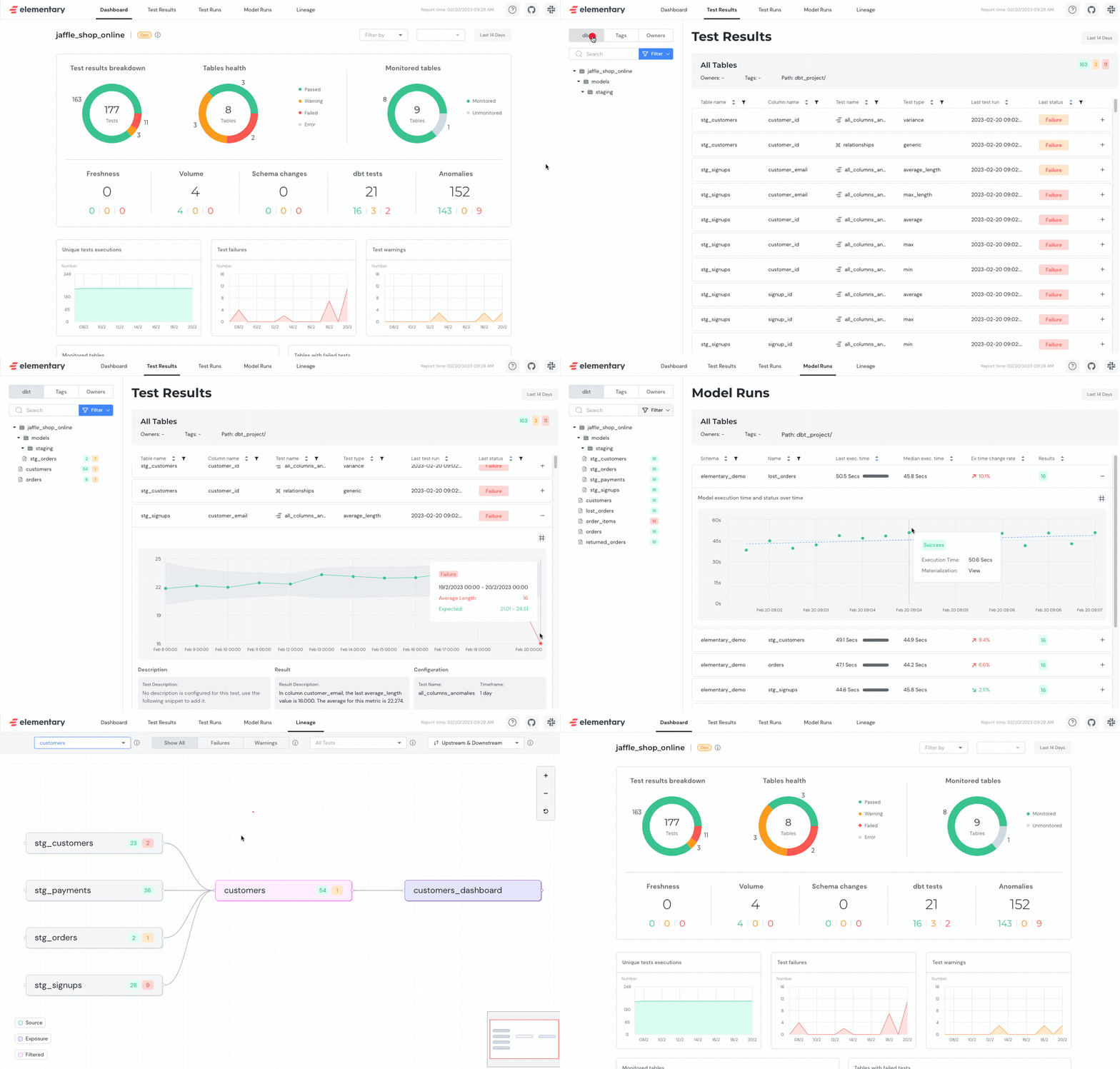 **You've just run your first Elementary report!**
## Let's get real though...
Data is rarely perfect. Let’s get real and add some more data to our project:
```shell theme={null}
dbt run --vars "{'anomalies': True}"
```
Now let's run our tests again:
```shell theme={null}
dbt test
```
Now we should see our Elementary tests fail!
Now let's visualize this failure:
```shell theme={null}
edr report
```
## Congratulations!
Congratulations, you successfully configured Elementary's tests and ran the report!
For additional information and help, you can use one of these channels:
* [Slack](https://elementary-data.com/community) (live chat with the team, community support, discussions, etc.)
* [GitHub](https://github.com/elementary-data/elementary) (bug reports, feature requests, contributions)
* 📧 Contact us directly at [team@elementary-data.com](mailto:team@elementary-data.com)
Any feedback would be highly appreciated 🤗