

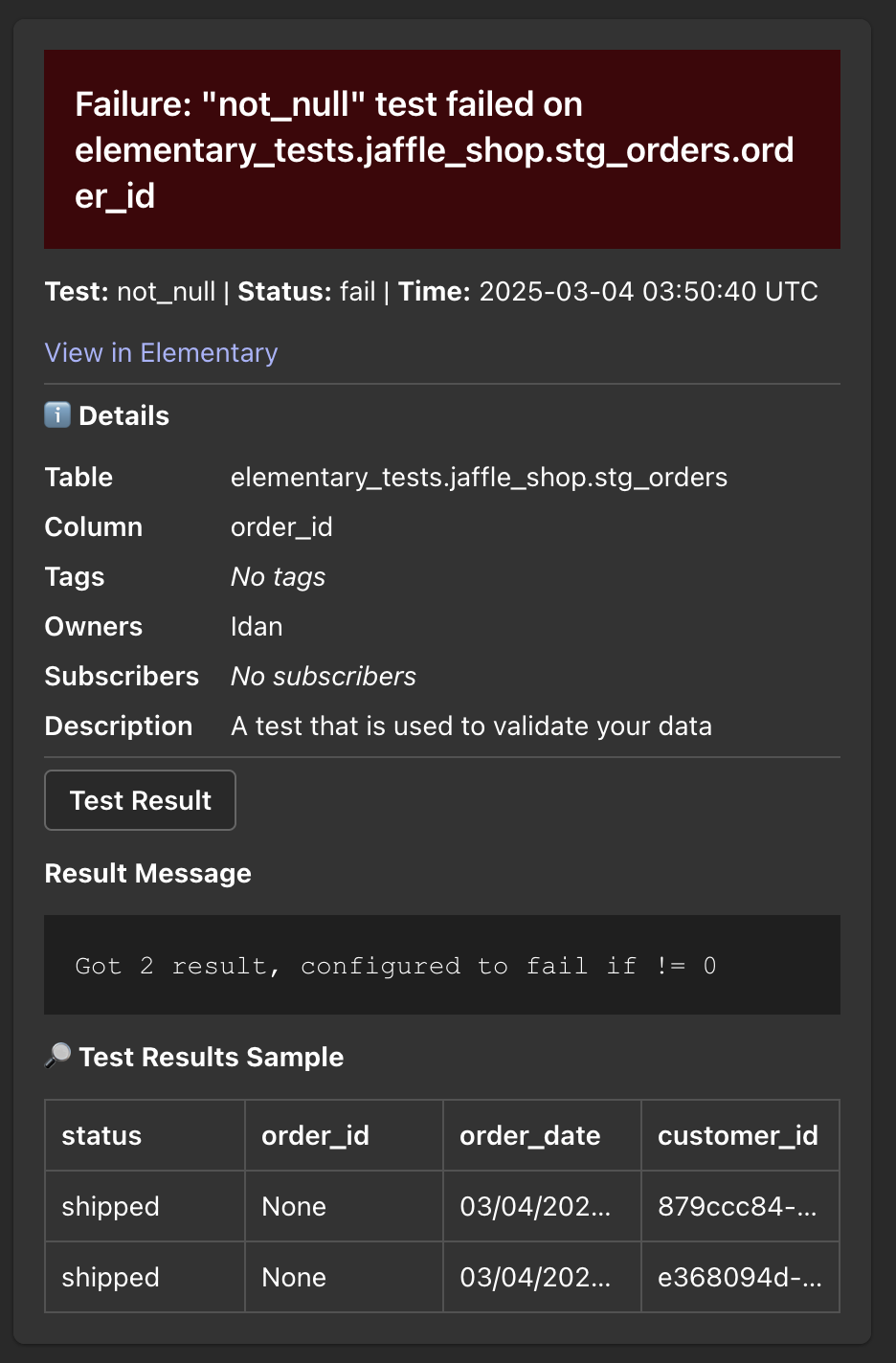
Enabling Microsoft Teams alerts
- Go to the
Environmentspage on the sidebar. - Select an environment and click connect on the
Connect messaging appcard (first card), and selectMicrosoft Teams.

-
For each MS Teams channel you want to connect, create a webhook using Power Automate. Power Automate is Microsoft’s recommended way to receive webhook requests in Teams. You can set it up in two ways — both produce the same webhook URL:
Option A — directly from Teams (faster):
- Go to your Teams channel
- Click the three dots (…) next to the channel name
- Select
Workflows - Choose the template “Post to channel when a webhook request is received”
- Copy the webhook URL
- Go to Power Automate
- Create a new instant cloud flow
- Search for “When a HTTP request is received” as your trigger
- Add a “Post adaptive card in a chat or channel” action
- Configure the team and channel where you want to post
- Save the flow and copy the HTTP POST URL
Elementary cannot directly verify if messages were successfully delivered via Power Automate. Monitor your workflow runs in Power Automate to check for any errors.
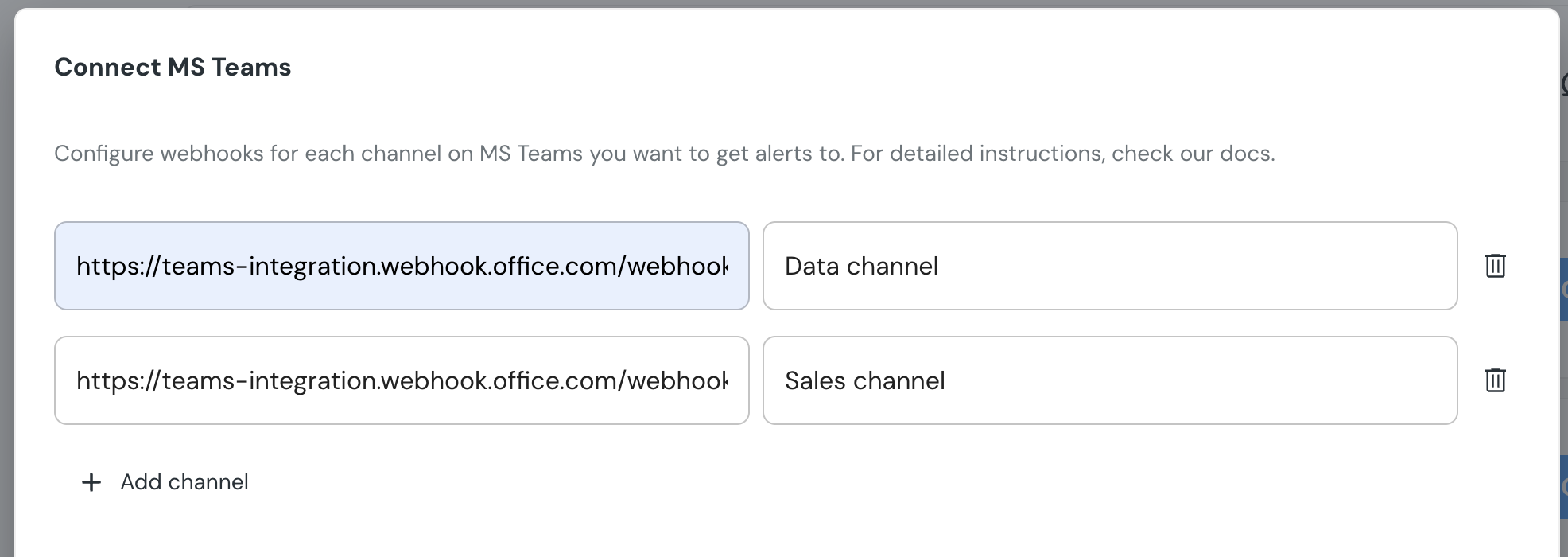
- Configure your Microsoft Teams webhooks and give each one a name indicating its connected channel:
- Select a default channel for alerts and set the suppression interval.
The default channel you select will automatically add a default alert rule to send all failures to this channel. Alerts on warnings are not sent by default. To modify and add rules, navigate to the
Alert Rules page.